

🥾Beowulf and the War Between Generations
The Ancient Conflict That Pops Up in Times of Change

Quick updates: Thank you for reading Imago Dad. If you’re new, welcome.
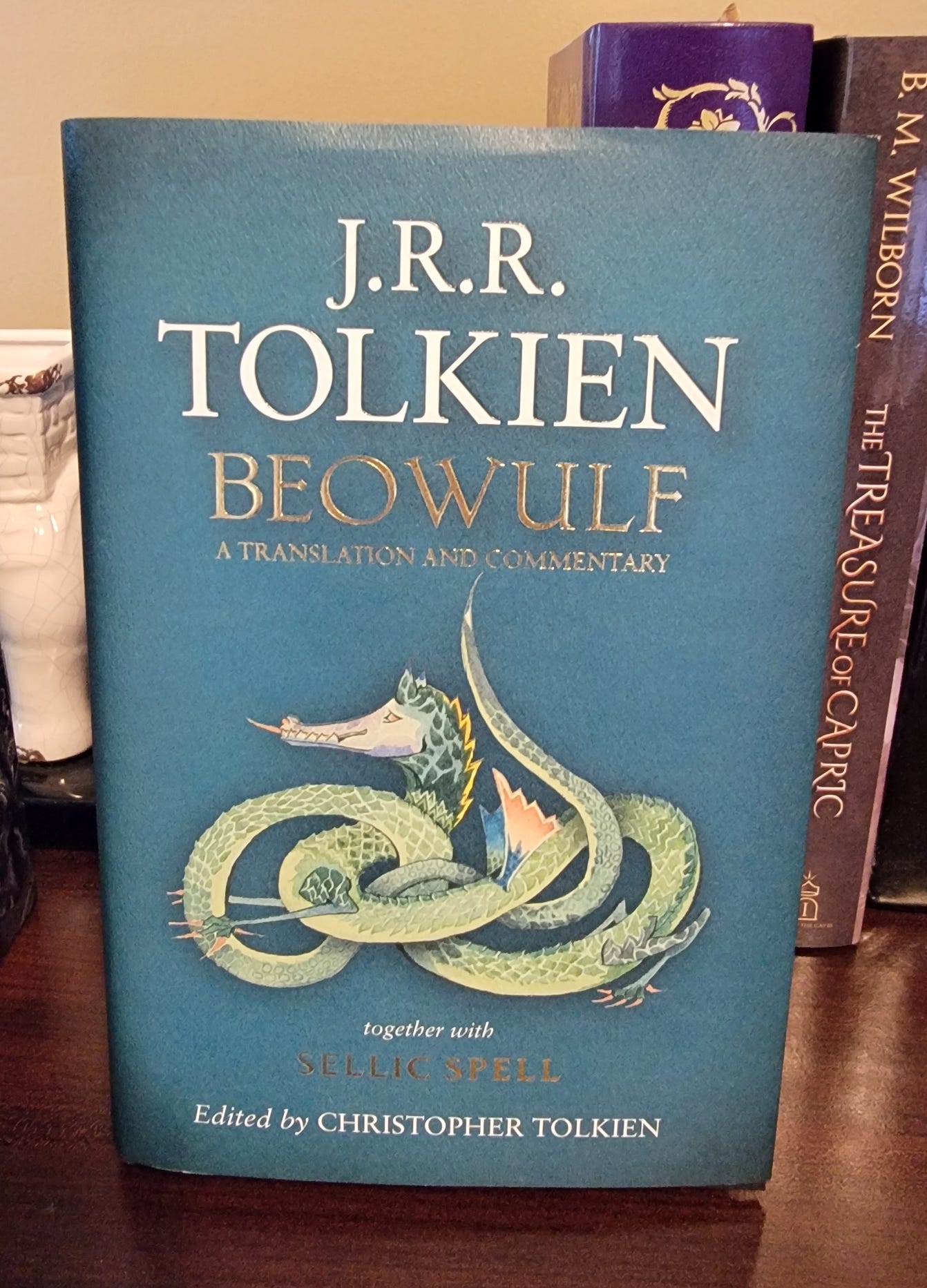
This is the final Beowulf essay for a while. Expect a livestream discussion in the next couple weeks where I’ll be giving away a Beowulf hardcover edition of Tolkien’s translation. Leave a comment to be entered.
This Friday, I’m be launching new serial fiction on the Stories & Pictures side of the publication.
Imagine an ancient wedding: There’s a beautiful princess and a strong prince. They’re both joyful, and the mead flows freely. But two guests have shown up who could spell disaster for both kingdoms.
Believe it or not, this brief tale in Beowulf is useful for us today. It gives us deep insights into the current generational challenges and griefs we’re having in the United States and in the West. Understanding how the ancients handled the expectations, responsibilities, and duties of different generations might give us some clues about how to get past the current antagonisms.
Guess what, guys? All of us are younger than some men and older than others. So how we deal with each other is going to spell either joy or grief for our future. And I think dads have a role to play in forging a better path.
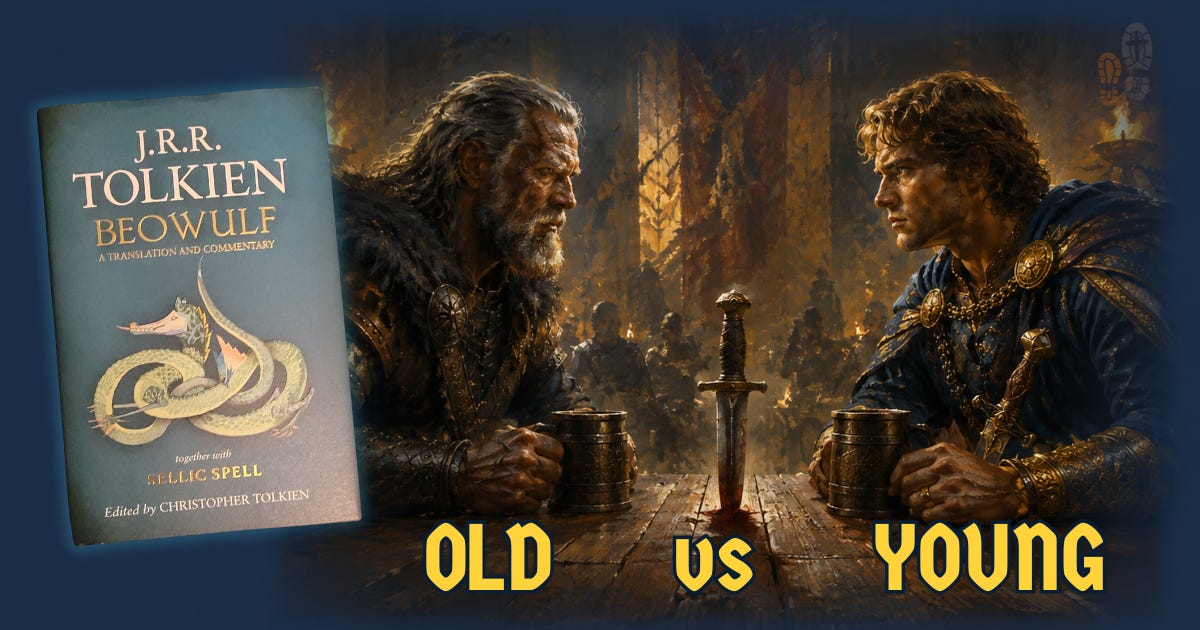
A Royal Marriage with a Treasonous Entourage
Beowulf returned home after defeating two monsters. In the report to his own king, he mentioned that King Hrothgar (the man he freed from Grendel), had betrothed his daughter Freawaru to Ingeld of the Heathobards. Hrothgar had won the war between their lands and wanted to create lasting peace through a marriage alliance.
The poet knew this was a historical event, but he put the familiar tale in Beowulf’s mouth almost as a prophecy, lifting the hero’s status for his own royal audience. He was artfully showing that Beowulf wasn’t only a strong and courageous man; he was also smart. He had political savvy and foresight, as a king should.
Here’s the story Beowulf shares as a warning.
In bringing the two kingdoms together, both prince and princess have their retinue of warriors. On the prince’s side, there’s an old veteran of the war. He remembers the battles, and he has held tight to his grudge against the Danes.
A young man arrives with the princess, coming into his former enemy’s hall wearing the spoils of battle that his father won. A gold ring on his arm, a sword with family history.
I hope you can see where this is going.
The older man sees the young man bedecked with treasures that once belonged to a friend of his. He looks to one of his own younger men and says,
“Canst thou not, my lord, the sword recall which thy father bore, his prizéd blade, unto the fray wearing his vizored helm upon that latest day whereon the Danes slew him…Now here the son of one, I know not who, among those slayers walks in this hall, his heart uplifted with fair things, boasteth of the slaying, and weareth that treasure which thou shouldst by right possess.”
Beowulf, Lines 1720-28 translated by JRR Tolkien
Translation: “That should have been handed down to you. And here’s this young punk showing it off in our court after his father killed yours!”
To the old vet, the young guy didn’t earn his trappings and now wearing it to this hall is an arrogant boast that demeans the king and his knights. He’s also holding onto the grief of war and nurturing a grudge, which goes against the plans his king has made. So, he’s not exactly being a loyal subject.
It’s unclear whether the younger guy is thinking, “Look what my dad did. In your face,” but that’s the way it’s perceived. He might just be proud of his father’s victory or have gained the sword as an inheritance. Either way, he’s not considering the delicacy of the situation and the tenuous peace being forged.
Whether through pride or ignorance, he’s also stirring up strife. Nobody escapes some of the guilt.
In Beowulf’s tale, someone kills the princess’ man and escapes. He anticipates this alliance is “filled with menace for the Danes.”
In history, it was the destruction of Hrothgar’s kingdom.
Want to win this hardback copy of Beowulf and some other cool stuff?
Share or comment on any of the Beowulf essays and stay tuned for details.
Essays in this series:
Generational Conflict (This Essay)
The Same Grievances, Playing Out Right Now
This ancient conflict has outlines like what we’re seeing between generations today, especially at both ends of adulthood.
I’m observing this as a “middle child” of our cultural landscape. I land right in the middle of Gen X and Millennial. Whether because of my age, or my personality, or my job, I end up in the middle of a lot of conversations between Boomers (and older Gen Xers) in conflict with Gen Z (and younger Millenials or older Alphas) as they’re entering the workforce and adulthood.
When they end up being upset with each other, they’re usually talking past each other. There are offenses, whether real or perceived, that they can’t get past. And they both sound like one of those disgruntled warriors.
I want to present both sides of what I’m hearing so that, hopefully, we can see where there are real problems, and where it might be over blown. But more importantly, where the gum is in the works and where there might be a fix.
Where’s the beef? What is each side saying? Let’s take age before beauty.
The older guys tend to hit these points:
Younger people seem entitled and self-important
They expect to climb the ranks faster than normal
They think their ideas are better, even if untested
They want to change things that have been figured out over decades
They assume familiarity with newer technologies is enough to deserve leadership
They assume new ways are better than established ways
They don’t have a good work ethic and aren’t willing to sacrifice
They miss work for what seem like frivolous excuses
They complain about work and are difficult with coworkers
They’re more likely to jump ship
There’s no respect for experience and the wisdom that comes with it
They’re easily offended by established processes
They’re less willing to listen to mentors and trainers
They second-guess decisions from leadership
They assume the older guys had it easy at their age
Think of it this way, these guys remember decades of hard work and struggle to get where they are. They earned their authority over time and despite failures. When a younger guy with no track record walks in acting like he knows a better way, it feels like a threat. It feels like the young warrior strutting around with a dead man’s baubles.
The younger guys share these points:
Older people are stuck in methods and mindsets that don’t fit the world as it is now
They’re resistant to tech that could make things easier, faster, or cheaper
They’re rigid on structures that don’t address live situations or are bloated and corrupt
They refuse to assess the current situation rather than rely on past experience
The work ethic is unrealistic, incompatible with modern needs, or exploitative
They didn’t balance work and life, and look at what that did to their families
Work commitment is inherently one-sided; it helps the elites more than you
Nobody listens to bright young talent
There’s no avenue to share good ideas
If you try to share your ideas, they’re shot down or ignored
They’ve squashed ambition and shut the doors of opportunity
They won’t let go of their power or positions, so nobody can move up
They keep eliminating middle positions and giving lower positions more work
They’re unwilling to train somebody who doesn’t already have the education and skills
Remember when you were a young man with more energy than know-how? You talk about mentors and people who gave you a chance. You talk about mistakes you made and how you grew into your current expertise and clout. The people coming up behind you are having a harder time finding those opportunities. The culture, demographics, politics, and technologies have changed, but the system keeps moving down the same track. They feel like the promised rewards were a mirage. Like the older warriors are just holding onto a lost past.
These are broad summaries of general statements I’ve heard and specific stories I’ve been told. It’s just the shape of the complaints, not a deep dive.
Both sides find enough examples to confirm their suspicions. So, the stereotype hardens like concrete, and each group sits behind their fortifications.
Want more from Imago Dad? Subscribe for weekly articles on faith, fatherhood, and masculinity through classic stories.
Know someone (especially a dad) needs encouragement?
Loved this post and want to say “thanks” with a tip? Make a 1-time contribution below. (No subscription needed!)
Generational Expectations in Beowulf (and the Bible)
Beowulf’s culture had clear structures for dealings between men. Ancient patterns built up mutual obligations between kings and warriors. Kings received the wealth of their kingdoms and the loyalty of their warriors. That was their earnings for leadership and responsibility. In return for the warriors’ courage and loyalty, the king was to be a generous patron.
Respect flowed both ways. You earned it through blood or gold.
Hrothgar was a good because of victory and generosity. His knights stuck with him through over a decade of Grendel’s onslaught. There’s also a warning about a king who wasn’t generous, and how it wrecked his kingdom. And a warning toward the end about cowardly men who let the hero die without coming to his aid.
This is largely about class for them, but the generational tension is there, too. The good kings were older and had wisdom. The young knights had to earn their place. As I wrote about here, even Beowulf wasn’t fully trusted in his home court until he’d proven his worth.
There is a deeper, natural hierarchy between generations that Beowulf just assumes. It doesn’t rely on the political or economic structure. That natural hierarchy is: Older people have more experience. They retain wisdom from successes and failures. That wisdom is worth respecting and deferring to.
In most traditional cultures, we see a natural respect for older people, perhaps just because they’ve survived all their mistakes! They carry lessons that are hard to learn from books, stories, or reason, and that may prevent a family or community from getting stuck in repeated mistakes from long ago. Younger people learn from them and gain more knowledge to hopefully carry their own efforts further and higher. This creates an organic flow between generations, waxing and waning in turn.
The Bible implicitly reinforces this natural pattern. Honor and respect for older generations is natural and expected. Honoring your parents is a command with no apparent expiration. At the same time, a young man like Timothy can earn respect beyond his years by living with dignity and competence. They can even become an example in faith to older, more recently converted believers.
In this system, the older generation becomes the brains while the younger provides the brawn. The Bible treats this like a partnership that is good for both sides, and in which each generation takes it’s turn.
The specifics of the hierarchy within Beowulf–kings and warriors—is more likely to change according to place and time. But those specifics work best when they harmonize with the natural hierarchy God set up for humanity. And that is where I think we’ve lost our way.
Amid waves of cultural upheaval our systems fight against the natural flow from one generation to the next. Individuals might still find older mentors and build long-term, mutually beneficial relationships that train and encourage the next generation, but it’s rarer than ever. It’s not that we haven’t been here before, but we’ve forgotten.
How Dads Can Help Restore Generational Order
In previous articles, I’ve mentioned John Eldredge’s seasons of manhood: Son, Warrior, Lover, King, Sage. He lamented almost 20 years ago that we have a culture full of poor kings—people in leadership who are negligent and selfish or outright corrupt. I think that assessment leads straight to where we are today.
Dads of all ages have unique opportunities to help get out culture back on track and headed toward a better future for all of us, by being better kings and raising young men to surpass us.
If your kids are young, you’ve got time and opportunity on your side. You can raise them to respect their elders and be willing to learn from anyone. There’s time to build a solid work ethic and an understanding that dreams require work, sacrifice, skill, and flexibility. They can start young with great works of wisdom, culture, and history.
But you also get to be their best model of good authority. Authority that guides with wisdom and patience. Authority that is open to counsel and willing to solve problems through multiple solutions, rather than “my way or the highway” dictates. You can give them authority and room to fail, so they can build their own wisdom with appropriate help.
Do that well, and when they’re older, they’ll have a picture of a good mentor or a good boss to follow as they leave your care to seek their own path.
If your kids are older and entering the workforce, you can be the trusted counselor they can turn to for guidance. If their boss is just a jerk, you can help them navigate those waters with wisdom. If they’ve got great ideas and the boss won’t listen, you can help them strategize, plan, and polish their pitch so they sound like a pro. Of course, you must walk the fine line between advising and meddling. And this requires a pretty good relationship already.
In your own workplace, whether you’re the older or younger guy, the worker or the boss, take a page from Beowulf.
Younger guys, offer respect and effort. Try to understand why things are done before changing them. Put in your dues. Earn the rewards and position you want. Be the trusted warrior worth rewarding. Present new ideas with a reasonable plan. But be ready to prove yourself for every opportunity.
Older guys, be like a patron-king. Invest in younger men with your time, resources, and knowledge. Listen to good ideas from anywhere. Lift promising people up into more responsibility and give them some slack to experiment. Have some patience if you have to explain that “new” ideas were tried and abandoned. Train someone to eventually exceed your accomplishments.
Somebody at some point must overlook the offense of either holding onto the past or being prideful and arrogant. The older warrior in Beowulf kept picking at a scab. Right now, older and younger guys are doing the same thing. That path leaves everyone worse off.
Both sides would benefit from humility, patience, and being willing to overlook those things that you might find odd, unusual, or cringy about each other.
If you’re a dad in either of these positions, you have the chance to show your kids how it’s done. How you deal with frustrations and setbacks. How you show respect or generosity, despite the inevitable frustrations of working relationships. Pull back the curtain a little bit, so your kids start to see reality and learn how to handle it.
Conclusion
With all the changes happening in our country, dads can move us down a better path. But it requires us to be honorable men first—even if we didn’t directly have that example—so we can train the next generation well.
This historical detail in Beowulf reveals that these problems aren’t new. Generations have always had some friction. But there’s plenty of other history, and innumerable tales, showing we can move past it. We might need a reminder that there’s a natural pattern. Then we can find the right structures that help us live together within that God-ordained flow of young and old. A positive future for our families and our civilization might depend on it.
In other news: This Sunday, there’s an event in Washington, DC to rededicate our nation to God. I hope you’ll join me and thousands of others in praying especially toward that end this weekend.
No matter how much we try to improve ourselves or our families, we won’t make a dent without humbling ourselves before the Almighty and relying on his grace and power to set us back on track.
Learn more at https://www.whitehouse.gov/freedom250/
This essay began as a walking rough draft. See it on YouTube.
Plans for Beowulf:
I’ve got a handful of other essay topics I’m working on from Beowulf. Here’s the potential list:
Generational Conflict (This Essay)
Leaving a Legacy (maybe in the future)
The Rare Gift of True Loyalty (maybe in the future)
After they’re released, I’d love to share a live discussion of the book with anyone who is interested.
Want to win this hardback copy of Beowulf and some other cool stuff?
Share or comment on any of the Beowulf essays and stay tuned for details.
Support:
This publication is reader-supported, and I’m genuinely grateful for every one of you.
If this piece was helpful or encouraging, the simplest way to support the work is to like, comment, or share it. That tells me what’s resonating and helps this reach other dads who need it. Sharing with a friend or family member is especially meaningful.
If you’d like to support Imago Dad more directly, there are a few ways to do that—no pressure, just options:
1 - Become a paid subscriber
Paid members help sustain the long-term work here and will be getting some exclusive resources for Christian dads.
2 - Read my fiction
I have a couple books of fantasy fiction for older teens and adults here, or you can get a free sampling on my sub-Substack, Stories & Pictures
Be on the lookout for my upcoming children’s book, Dog Knights and The Orb of Power
3 - Make a one-time contribution If you really loved this article or want to support Imago Dad, you can send a one-time contribution below. You choose the amount. No subscription needed!
In addition to Imago Dad, Brandon Wilborn writes speculative fiction with spiritual themes. Find his previously released books at BrandonWilborn.com
Disclosure: Links on this page may be affiliate links. If you choose to purchase anything through them, it will not change your price, but may support the author.